Processor French Bread
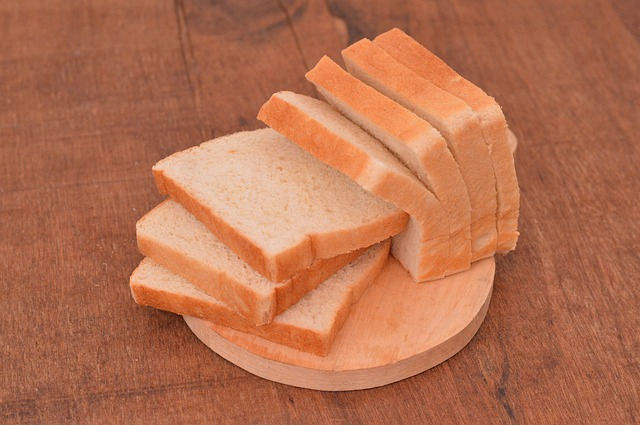
Ingredients & Directions 1/2 c Warm water (105 F) -flour 1 1/2 pk Active dry yeast 2 ts Salt 1 ts Sugar 1 ts Sugar 3 1/2 c All-purpose or unbleached 1 c Warm water (105 F) Makes 2 loaves Flour Generously grease baguette pans. Combine 1/2 cup warm water with yeast and 1 tsp sugar in small bowl and let stand until yeast is dissolved and mixture is foamy, about 5 minutes. Combine flour, salt, remaining sugar and yeast mixture in work bowl of food processor. With machine running, slowly begin adding 1 cup warm water. A soft ball should form in several seconds; if not, add a little more warm water. Let machine run 15 to 20 seconds, adding more flour if dough seems too soft. Transfer dough to lightly floured board and knead with a little additional flour for several turns. Divide dough in half and shape into two cylinders 8 to 10 inches long. Transfer to prepared pans and cut 3 or 4 diagonal slashes in top of each loaf with tip of knife or single-edged razor blade. Cover and let rise in warm place until doubled, about 45 minutes to 1 hour. After about 30 minutes, place racks in middle and lower quarters of oven and begin preheating to 450 F. Center shallow pan of water on lower rack. When dough has doubled, place on middle rack directly above water and bake 10 minutes. Reduce heat to 400 F and continue baking an additional 15 minutes, or until loaves are golden brown and have a hollow sound when tapped with finger. Yields 2 servings
Mom Mackay's Cranberry Bread
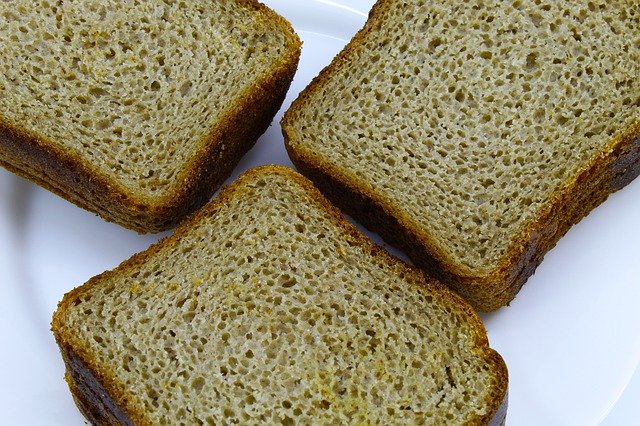
Ingredients & Directions 2 c Flour, all-purpose 1 c Sugar, granulated 1 1/2 ts Baking powder 1/2 ts Baking soda 1 ts Salt 3/4 c Orange juice (juice -of one large orange) 2 tb Shortening 1 tb Orange peel, grated -(one large orange) 1 Egg, beaten 1 c Cranberries, halved -or chopped 1 c Walnuts or pecans, -chopped Preheat oven to 350 degrees F. Grease the bottom, but not the sides, of two small loaf pans. In a large bowl, sift together all the dry ingredients (flour, sugar, baking powder, baking soda and salt). Blend very well. Mix together the orange juice, orange peel, melted shortening and beaten egg. Mix only enough to blend uniformly. Mix in the cranberries and the nuts; stir gently. Pour the mixture into the loaf pans. Push it to the corners, leaving the center slightly hollow. Bake about an hour at 350 degrees F. The loaves are done when a toothpick inserted in the middle comes out clean. Cool completely before cutting. Do not try to serve warm. NOTES: * A festive cranberry-orange nut-bread — My grandmother MacKay clipped this recipe from the 1951 edition of the Pillsbury Bake-Off competition recipes, and we’ve made it a family tradition ever since. From time to time my mother and I have both tried to improve on the recipe, but it appears that the recipe is already perfect; every variation we have ever tried has been disappointing by comparison. When I was a boy, before the invention of the food processor, making this bread required cutting the cranberries in half by hand, with a knife, and the person who brought 4 loaves of cranberry bread to the family Thanksgiving meal was more welcome than the person who brought the turkey. Now, between Baker’s Secret loaf pans and Cuisinart slicer blades, you can knock out 8 perfect loaves of the stuff while watching one episode of Sesame Street. My grandmother still cuts each cranberry in half with a paring knife, and hers still tastes better than mine. Yield: 2 small loaves. * It takes practice to know when to stop mixing the dough. If you mix too much, the bread gets a chewy texture to it, whereas it should have a very crumbly consistency, like a muffin or cornbread. * It really makes a difference in the texture of this bread to use a shortening that is solid at room temperature, like Crisco. It really makes a difference in the flavor to use fresh orange-peel and not powdered. I prefer walnuts to pecans. * It might seem sensible to try to use the same orange for the peel and the juice, but it is really more trouble than it is worth to try to peel a juiced orange or juice a peeled orange. I usually use two oranges and eat the one that I took the peel from. * This bread keeps well in the freezer. Specifically, it keeps from Thanksgiving to Christmas. It also survives quite well being mailed by parcel post from Indiana to Maryland. : Difficulty: moderate. : Time: 10 minutes preparation if you have a food processor, 2 hours baking and cooling. : Precision: Measure carefully. : Brian Reid : DEC Western Research Laboratory, Palo Alto, California, USA : reid@decwrl.DEC.COM -or- {ihnp4,ucbvax,decvax,sun,pyramid}!decwrl!reid : Yields 2 loaves
Teddy Bear Bread
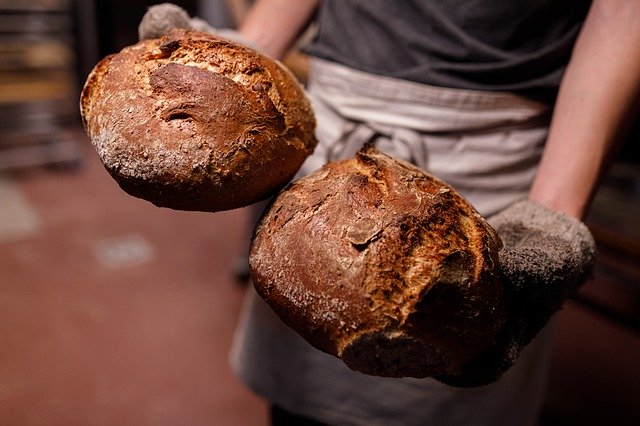
Ingredients & Directions 1/2 c Milk 3 tb Sugar 2 ts Salt 3 tb Margarine 1 pk Active Dry Yeast 1 1/2 c Warm water 7 c Flour 1 Egg Raisins Scald 1/2 cup milk; stir in 3 tb sugar, 2 ts salt and 3 tb margarine. Cool to lukewarm. Dissolve 1 package Active dry Yeast in 1 1/2 cups warm water. Add milk mixture and 3 cups unsifted flour; beat until smooth. Stir in enough more flour (3 1/2-4 cups) to make a stiff dough. Onto floured board knead 8-10 minutes. Place in greased bowl, grease top and cover. Let rise until doubled, about 1 hour. Punch down. Divide in 4 equal parts. Cut one piece in half and one piece in 14 pieces. Shape into balls. Put large balls on greased baking sheets, for bodies. Place medium balls above for heads.Flatten slightly. Pinch seams. Attach small balls for paws, noses and ears. Cover. Let rise until doubled, about 1 hour. Make indentations in ears. Place raisins for eyes and belly buttons. Mix 1 egg and 1 tb water, brush on bears. Bake at 400, 25-30 minutes. Cool Yields 2 Bears
Egg Bread – Pan-1

Ingredients & Directions XKGR41A Don Fifield 2 1/4 c Bread Flour 1 tb Sugar 1 ts Sugar 1 tb Dry milk 1 ts Salt 1 tb Butter 1 sm Egg 3/4 c Milk; or enough to make -16/16 c with the whole egg 1 ts Dry yeast Bake (Rapid) mode may be used. Place all ingredients (except liquids and yeast) inside the bread pan. Add liquid ingredients. Close cover and place dry yeast into the yeast holder. Press start. Yields 1 Servings
Cheddar Cheese Biscuits
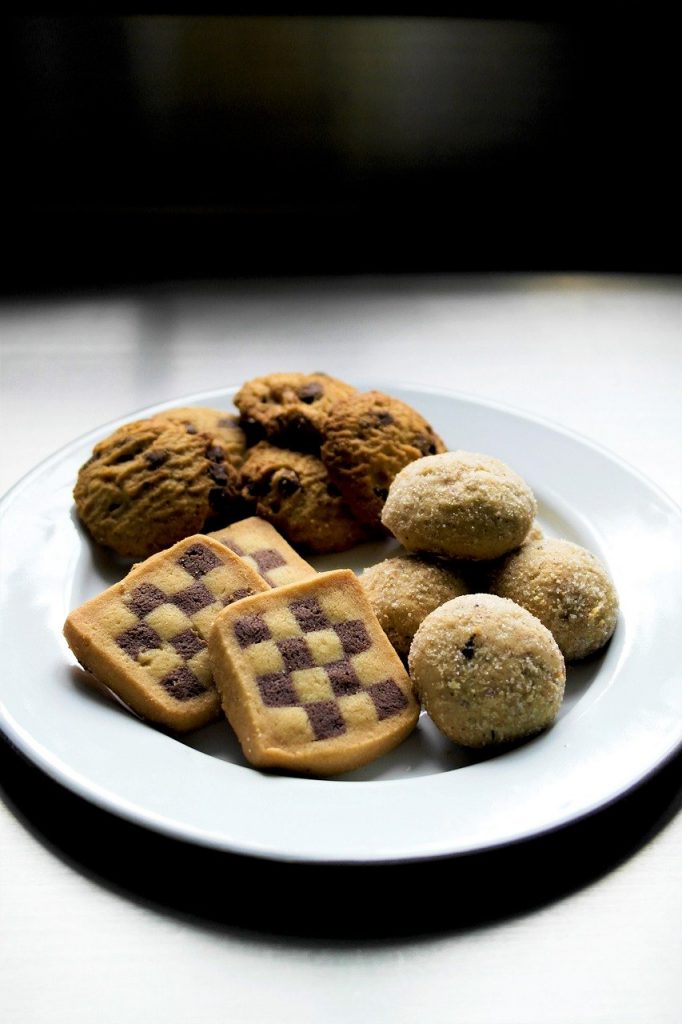
Ingredients & Directions 2 c Loosely packed shredded -sharp Cheddar (5 1/2 oz) 6 tb Unsalted butter, room temp. 1/2 ts Worcestershire sauce ds Hot pepper sauce (Tobasco) 1 1/4 c Sifted A-P flour Poppy seeds Sesame seeds Celery seeds Mix Cheddar cheese, unsalted butter, Worcestershire sauce and hot pepper sauce in large bowl until well blended. Add flour and stir until thoroughly combined. Share dough into 10-inch-long log. Wrap in plastic and whill at least 3 hours. (Can be prepared 2 days ahead. Keep refrigerated.) Preheat oven to 350F. Cut dough into 1/4-inch slices. Space evenly on baking sheets. Sprinkle some with poppy seeds, some with sesame seeds and some with celery seeds. Bake until edges are golden brown, about 15 minutes. Cool biscuits on baking sheets 15 minutes. Transfer to rack and cool completely. (Can be prepared 2 days ahead. Store in airtight container.) From Yields 36 Servings
Orange Almond Torte With Orange Sauce And Marsala Cream
Ingredients & Directions –CAKE– 1/2 c Unsalted butter; room -temperature (1 ; stick) 3/4 c Sugar 1 lg Egg 2 lg Egg yolks 1 c Almonds; toasted, finely ; ground 1/2 c All purpose flour 2 tb Orange juice 1 tb Orange juice 1/2 ts Ground coriander 1 pn Salt 2 lg Egg whites -CREAM- 1 c Chilled whipping cream 2 tb Powdered sugar 2 tb Sweet Marsala Additional powdered sugar Orange Sauce -ORANGE SAUCE- 1 c Fresh orange juice 1 1/2 tb Cornstarch 2 tb Unsalted butter; (1/4 stick) 1/4 c Sugar 1 tb Grated orange peel For cake: Preheat oven to 375F. Butter 8-inch-diameter springform pan. Line bottom of pan with parchment. Butter parchment; dust with flour. Beat 1/2 cup butter in large bowl until fluffy. Gradually add sugar, beating until blended. Add egg, then yolks, 1 at a time, beating well after each addition. At low speed, beat in almonds, flour, orange juice, peel, coriander and salt, scraping down sides of bowl occasionally. Using clean dry beaters, beat whites in medium bowl until stiff but not dry. Fold whites into batter in 2 additions. Transfer to prepared pan. Bake cake until top is golden and tester inserted into center comes out clean, about 40 minutes. Cool cake in pan on rack. (Can be made 1 day ahead. Cover and let stand at room temperature.) For cream: Beat whipping cream and 2 tablespoons sugar in medium bowl until soft peaks form. Mix in Marsala. Dust cake with powdered sugar. Cut cake into wedges and serve with Orange Sauce and Marsala cream. For orange sauce: Whisk juice and cornstarch in bowl until cornstarch dissolves. Melt butter in heavy small saucepan over medium-high heat. Whisk in sugar, orange peel and orange juice mixture. Whisk until sauce boils and thickens slightly, about 4 minutes. Remove from heat and cool. (Can be made 2 days ahead. Cover and chill. Bring to room temperature before serving.) Orange sauce makes about 1 1/4 cups. Serves 6. Yields 1 servings
Pumpernickel Bread With Sourdough Starter
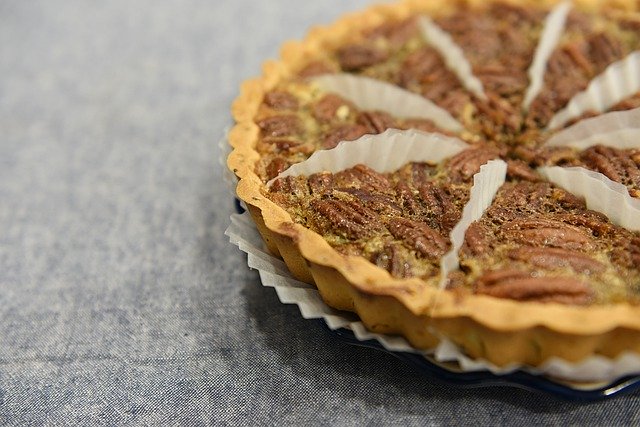
Ingredients & Directions -THE SOURDOUGH STARTER- 1 tb Active dry yeast 1/3 c Nonfat dry milk 1 c Warm water 3/4 c White flour 1/2 c Rye flour THE BREAD DOUGH 1 1/3 c The starter 1/3 c Nonfat dry milk 2 1/2 c Warm water 3 c White flour; preferably -unbleached, (up to 3-1/2) 2 c Pumpernickel flour*; (up to -2-1/4) 1 tb Active dry yeast 4 ts Salt 3/4 c Stone-ground corn meal 2 tb Molasses 3/4 c Toasted rye bread crumbs or -wheat germ Corn meal; (for round -loaves) -GLAZE- 1 tb Molasses mixed with 1 tsp -water Mix all ingredients for the starter together in a medium-size bowl, beating into a smooth batter. Cover with plastic wrap and leave in a warm place, such as on top of the stove near a pilot light or close to a radiator. The starter will rise and bubble up, then sink back. It is ready to use after 24 hours. To keep: put in a screwtop jar – 1-quart size or larger, if you want to keep adding to it – and refrigerate. About every five days feed your starter 1/2 cup flour (3 parts white to 1 part rye) and 1/2 cup water mixed with 2 tablespoons dry milk. Leave, covered, in a warm place until it bubbles up again, then use what you want of it to make bread; return the rest – or all of it, if not using immediately – to the refrigerator. The bread dough: Make a sponge first by mixing 1 1/3 cups of the starter, the dry milk, 1 1/2 cups warm water, 1 cup of the white flour, and 1 cup of the pumpernickel flour. Cover with plastic wrap and leave in a warm place 2-3 hours. In a large bowl dissolve the yeast in the remaining cup of warm water. Stir in the sponge, salt, corn meal, molasses, the bread crumbs, and the remaining flours, holding back about 3/4 cup of the white flour. Turn the dough out on a floured working surface after it becomes too stiff to stir and let rest while you clean out the bowl. Knead the dough, adding more flour as necessary. The dough will be very sticky. After 10 minutes kneading, return the dough to the cleaned ungreased bowl, cover, and let rise until double in volume – about 2 hours. Punch down the dough, knead briefly in the bowl, cover, and let rise again until double in volume – about 1 1/2 hours. Turn the dough out and divide in half. Either shape into 2 loaves to go into two greased 9-inch bread pans or make 2 round loaves and place far apart on a greased baking sheet sprinkled with corn meal. Let rise, covered with a kitchen towel, for about 1 hour. Brush the loaves with glaze. Bake in a preheated 425 F oven – if you have tiles or baking stone, slide the round loaves directly onto the hot surface. Bake 10 minutes, then lower the heat to 350 F and bake 35 minutes more. Remove and cool on racks. * If you cannot get coarse pumpernickel flour, use instead dark rye flour and bran in proportions of 2 to 1. Yields 1 Servings